Cycle time down 40%, baseline quality up.
By embedding AI into research synthesis, PRD review, story decomposition, acceptance criteria, and design QA, teams shipped faster with fewer review loops and clearer handoffs.
From brief to first reviewable artifact.
Fewer ambiguity loops before engineering handoff.
More time spent on judgment, systems, and craft.
This case study is intentionally shown as an evolving operating system.
Unlike a shipped product case study, this is a living internal workflow layer. The goal is to show how I'm actively changing the way product design work happens at ManifestGlobal.
Still evolving
Skills are being refined as new PRD, Jira, and engineering handoff patterns emerge.
Human-led
AI speeds up operational work, but designers still own judgment, prioritization, and final decision-making.
Why this belongs early
The WIP framing makes the work feel current, experimental, and operational rather than over-polished.
I built task-specific skills instead of relying on generic AI prompts.
The real shift was moving from “ask AI for help” to reusable workflow skills that match how PMs, designers, and engineers collaborate.
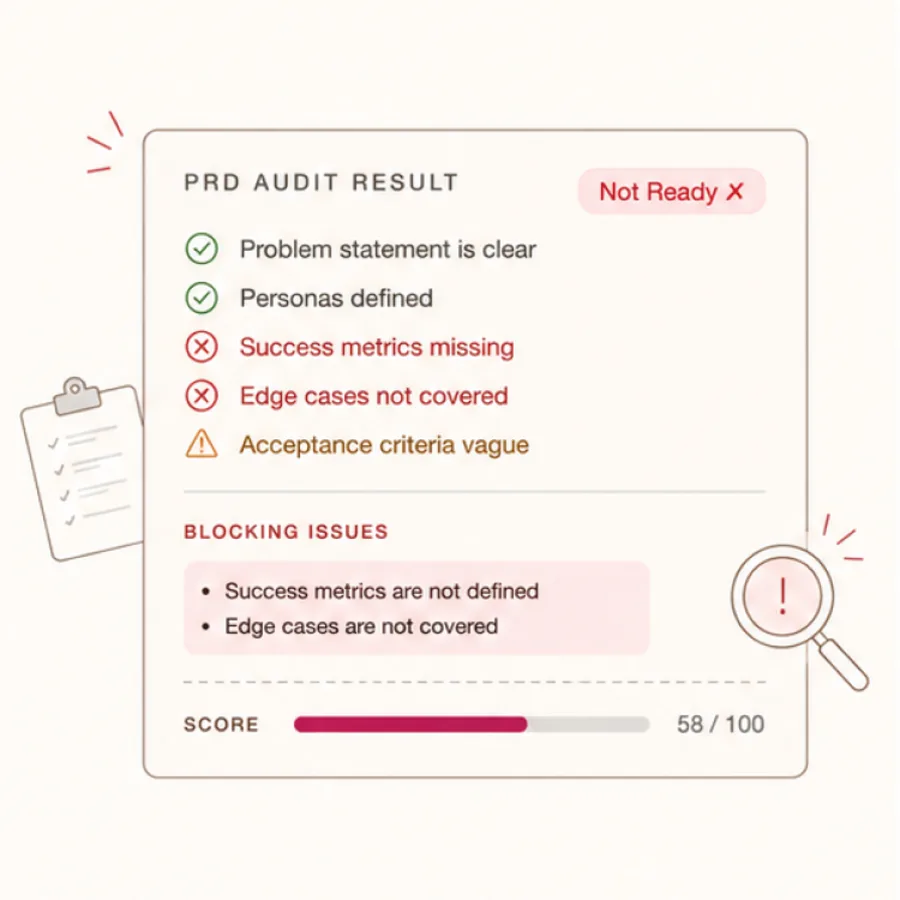
PRD Quality Enforcer
ReviewAudits ManifestGlobal PRDs before engineering review and returns a clear verdict: ready or not ready, with blocking issues and actionable feedback.
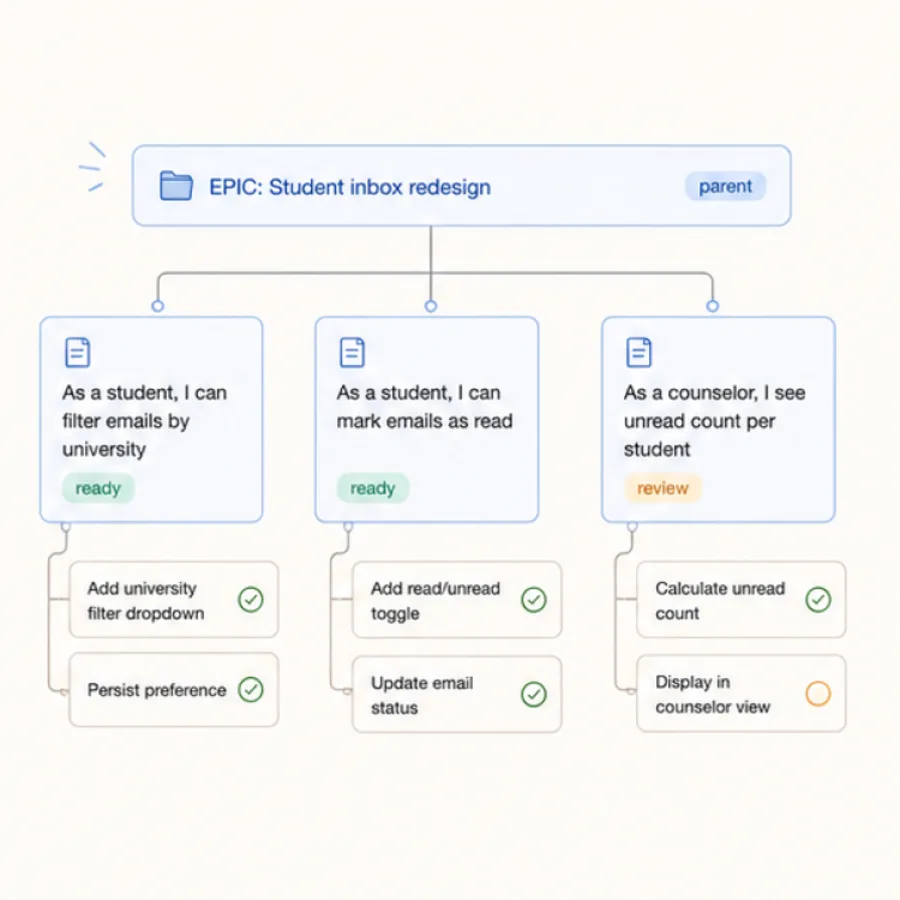
User Story Decomposer
BreakdownTurns PRDs, epics, and Jira tickets into engineering-ready user stories with parent-child context preserved.
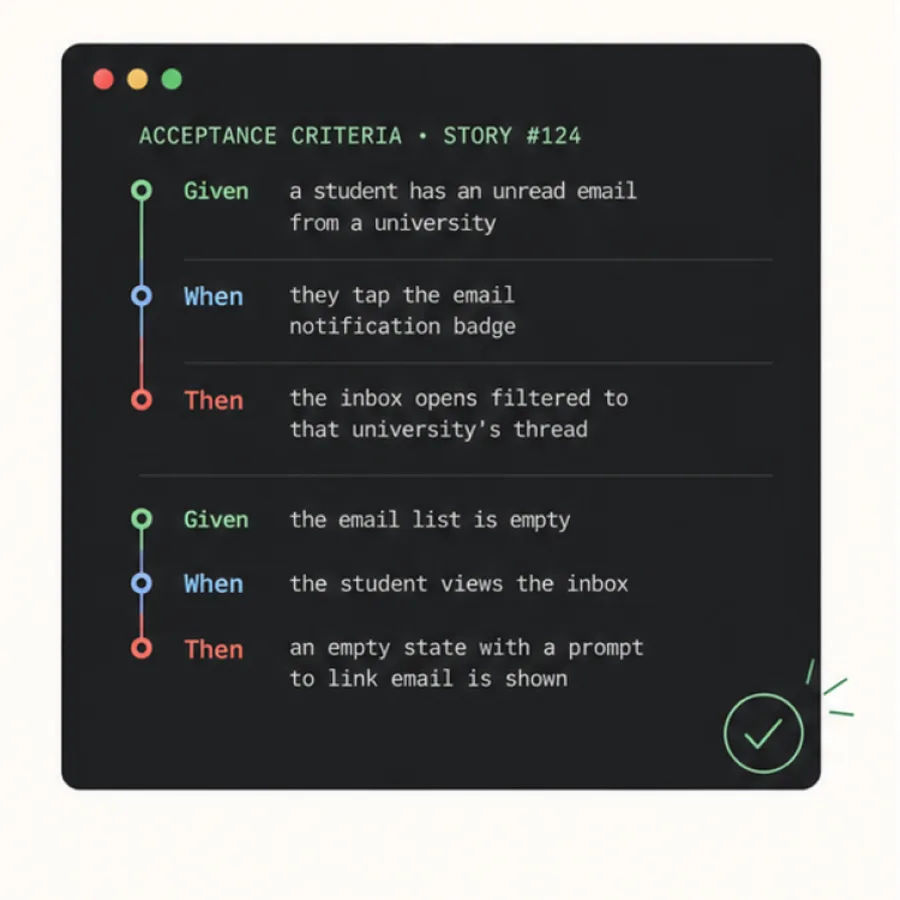
Acceptance Criteria Generator
QAGenerates structured, testable Given/When/Then acceptance criteria for Jira tickets and feature descriptions.
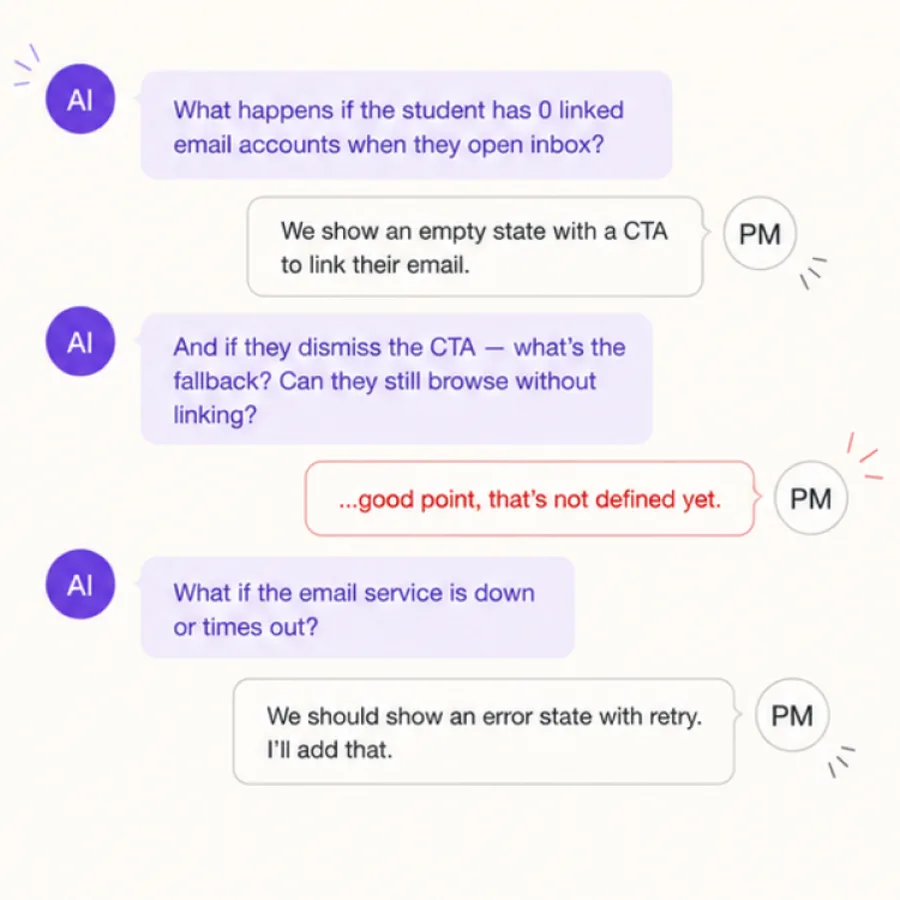
Grill Me
CritiqueStress-tests plans and design decisions until assumptions, branches, and rationale are clear.
Why this is stronger than a prompt library
These skills are opinionated, repeatable, and tied to specific moments in the product lifecycle.
From manual operating rhythm to AI-assisted design infrastructure.
Before
Teams manually reviewed PRDs, decomposed stories, wrote acceptance criteria, and stress-tested logic through repeated meetings and comments.
After
AI skills pre-process repetitive work, surface quality gaps, and give teams a stronger starting point before human review.
Input
PRD, Jira ticket, epic, design plan, or feature request.
AI skill pass
Skill reviews, decomposes, critiques, or generates structured output.
Human judgment
Designer or PM validates tradeoffs, edge cases, sequencing, and priority.
Cleaner handoff
Engineering and QA receive more complete, testable artifacts.
The designer still owns the thinking.
I positioned AI as an operational layer, not a design authority. It can speed up drafting, critique, and structuring, but it cannot replace product strategy, tradeoffs, user empathy, and craft.
AI supports
Drafting, decomposition, consistency checks, and first-pass critique.
Designer owns
Prioritization, rationale, user understanding, quality bar, and final decisions.
Team benefits
Fewer repetitive loops and more meaningful product discussion.
The real win was not faster output. It was creating more room for better judgment.
More case studies
A retention-focused FTUE redesign that increased D0–D1 retention from 16% to 34%.

Built an in-house mail app, turning fragmented admissions emails into structured outcome intelligence.
Tagged Flywire payments in ManifestGlobal to unlock rewards for parents/guardians