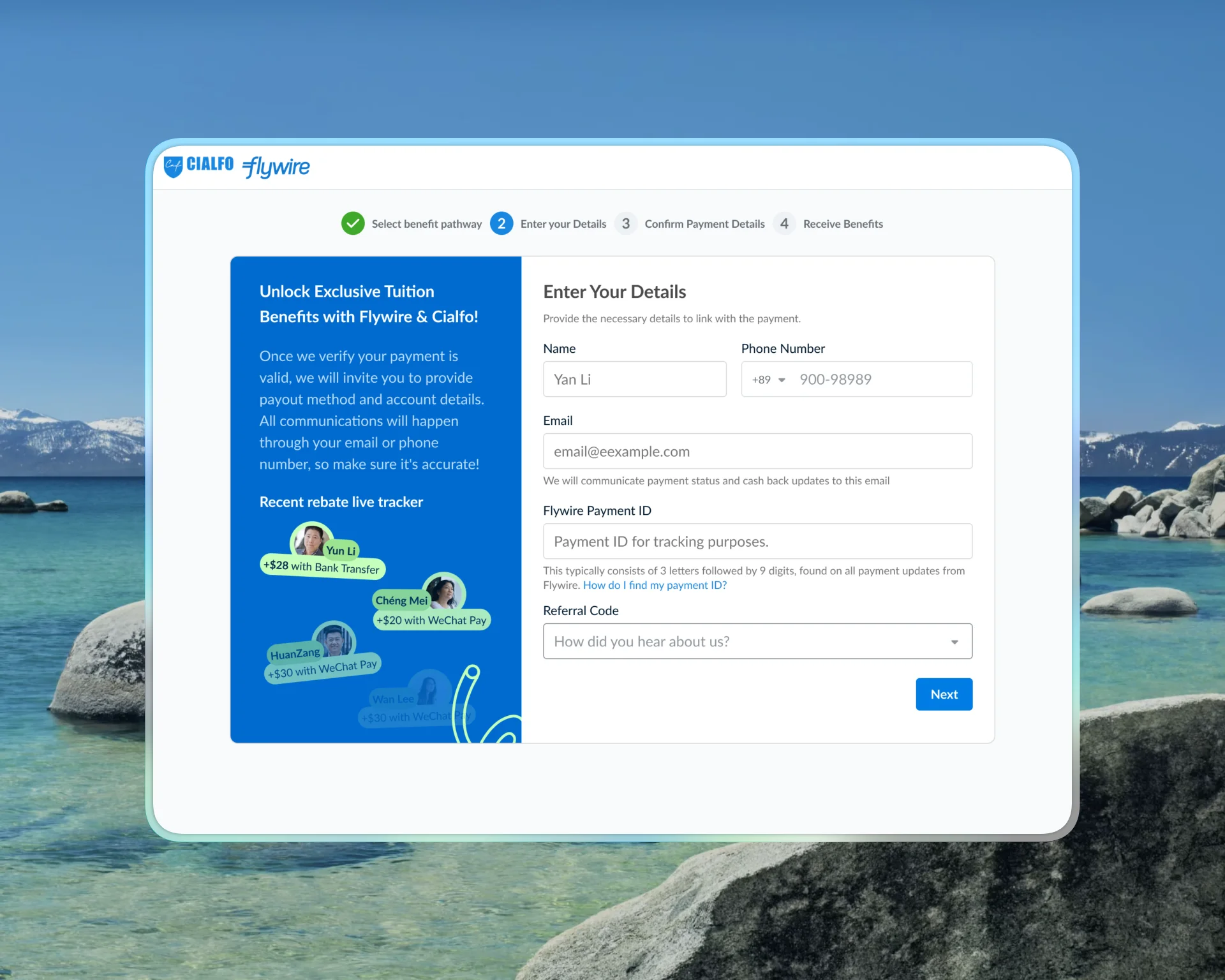
Admission was digital. Tuition payment still felt offline, risky, and opaque.
The opportunity wasn't to add a payment button. It was to find a wedge into the most stressful moment after admission, somewhere a small, focused product could earn its way in before scaling into a trust layer.
01 Acceptance letter Day 0 | 02 Tuition due +30 days | 03 Payment sent +45 days | 04 Confirmation +50 days | |
|---|---|---|---|---|
Family Student / Parent | Relief | FX uncertainty | Did it land? | Refund doubt |
Counselor ManifestGlobal user | Closing the loop | No visibility | No tracking | Late escalations |
Business ManifestGlobal / Flywire | Funnel exits | THE WEDGE LIVES HERE No ManifestGlobal surface. Flywire owns this moment entirely. | THE WEDGE LIVES HERE Post-payment gap. No attribution, no cashback hook. | Re-engage |
Family anxiety spikes exactly where counselor visibility disappears and business presence is empty. The wedge band shows the gap spatially — columns 02 and 03 are where the MVP earns its place.
India was the entry wedge because the payment pain was visible at scale.
Hidden markups and intermediary fees erode trust before the transfer even begins.
Upfront quote, full fee breakdown, and live FX rate visibility before pay. (Roadmap)
Regulatory and documentation anxiety stalls families mid-flow.
Country-specific helper states and checklist copy tied to each university. (Roadmap)
Delayed confirmation leaves families guessing if the university got paid.
Status timeline plus push and email notifications at every step. (Partially shipped, payment status dashboard)
Confidence matters more than convenience alone.
Survey signals pointed to the same conclusion: families pay through routes they trust, not just the ones that are fastest.
- Yes86%
- No14%
- Charged hidden fees19%
- Unaware81%
- Computer46%
- On campus21%
- Phone13%
- Tablet10%
India, China, and Vietnam showed different versions of the same anxiety.
Instead of treating all international payments as one generic flow, I looked at how local trust, cost, and access patterns shaped the experience I needed to build for each country. Shared anxiety across all three: “Did the money reach the right place, on time, in full?”
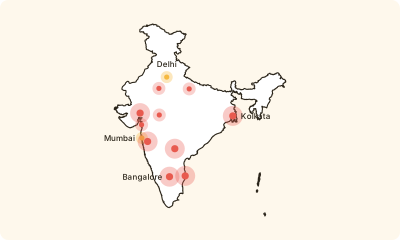
Customer story: “Where exactly does my money go?”, Parent, Pune.
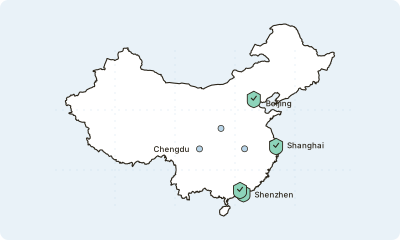
Customer story: “Will the bank even approve this?”, Parent, Shanghai.
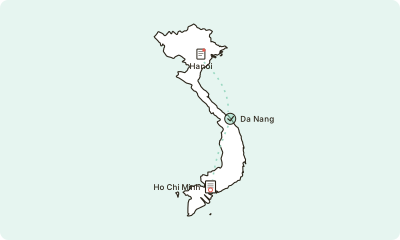
Customer story: “Did they receive all the papers?”, Parent, Hanoi.
The journey broke at the exact moments families needed reassurance.
Across actors, student/parent, counselor, university, every stage of the post-admission flow failed in a different way. The MVP addresses the latter half of this journey, submission, confirmation, and benefit resolution, through the cashback claim flow. The earlier stages (cost transparency, route selection, live tracking) become the trust-layer roadmap.
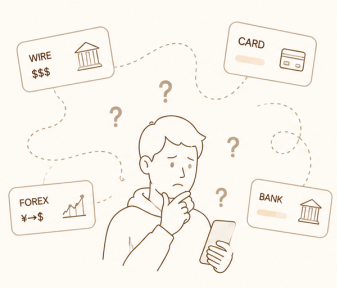
“Which route is right? What does this cost? Did it land?”

“I can confirm payment happened. I can't see what happened next.”
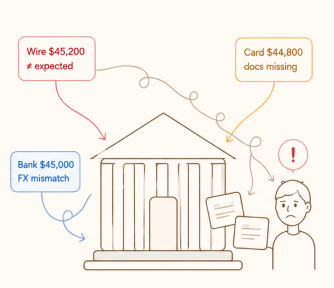
“Three payments, three amounts, zero clean attribution.”
Families face a maze of routes with no clear sense of cost, trust, or who to contact when something goes wrong.
A clear, trustworthy path to pay and confirm it landed.
Counselors lose sight of the payment journey mid-flow, leaving them unable to reassure families or catch errors early.
Visibility into payment status to reassure families and close the loop.
Universities absorb the downstream chaos — mismatched amounts, missing docs, and frustrated students arriving after payment.
Clean, attributable tuition payments with accurate records attached.
The MVP shipped the last mile. The full trust layer is the roadmap.
We built the first beachhead, a 4-step claim flow that captures ManifestGlobal attribution after a Flywire payment. The 6-step trust journey is what it expands into once the wedge proves out. 4 shipped, 2 next.
The architecture was designed for four layers. The MVP shipped two.
Holding the line on the Transaction Layer, not duplicating Flywire, is the most defensible decision in the architecture. It keeps ManifestGlobal out of the regulated payment-rails business and frees scope for the trust surfaces around it.
Entry points, offers, counselor nudges, and campaigns.
University match, home-currency quote, fee transparency, method comparison.
Flywire owns checkout, documents, local bank options, and saved drafts. ManifestGlobal deliberately does not duplicate.
Tracking, history, refund visibility, notifications, support, and confirmation.
Strategic scope decision: Layers 1 + 4 are ManifestGlobal's moat — intent before payment and trust after it. Layer 3 is intentionally surrendered to Flywire. Staying out of the regulated payment-rails business frees engineering scope for the intelligence surfaces that drive retention and attribution.
The MVP supported the moment families came back, not the moment they arrived.
These three describe what actually pulls a family back to ManifestGlobal after Flywire, anxiety about whether the payment landed, plus the cashback incentive. The original v1 stories described the trust layer's user, not the wedge's.

Help me confirm payment landed and unlock my cashback.
So I can trust the payment went through without chasing Flywire support.

Match my Flywire transaction to my account. Don't make me re-enter what I just did.
So I can verify without duplicating effort or second-guessing myself.

Show me my rebate status and let me set my payout method.
So I can claim what I earned without hunting for it separately.
From “did my payment land?” to “I can see and claim my benefit.”
How much should ManifestGlobal own?
Tradeoff between a fast launch and a deep trust layer, we chose the trust layer's architecture, with the wedge as its first surface.
- Fastest launch
- Lowest UX ownership
- Weak attribution
- Limited trust-building
- Higher confidence
- Stronger funnel
- Visible ManifestGlobal value
- Tracking + support ownership
We sequenced around trust gates.
Three gates, each one a question the wedge has to answer before earning the next investment. Each gate is grounded in something that actually shipped and can be measured. The trust-layer expansion is unlocked when these three gates clear, not before.
The product had to double as an acquisition funnel.
Each stakeholder needed a belief, and a surface that proved it. The MVP's whole point is to prove ManifestGlobal can hold the post-admission tab, everything else expands from there.
Success was the second visit.
The MVP wasn't measured on whether families completed their tuition payment, Flywire owns that. It was measured on whether families came back to ManifestGlobal after paying, and whether they claimed their benefit. ==Return = the wedge worked. Repeat = it's defensible==.
The highest-value fintech UX does not always start with the payment itself.
Sometimes it starts with the moment after, the moment the user comes back. The trust layer is the goal. The cashback hook is the wedge. Both are part of the same product strategy; one of them just shipped first.
More case studies
A retention-focused FTUE redesign that increased D0–D1 retention from 16% to 34%.
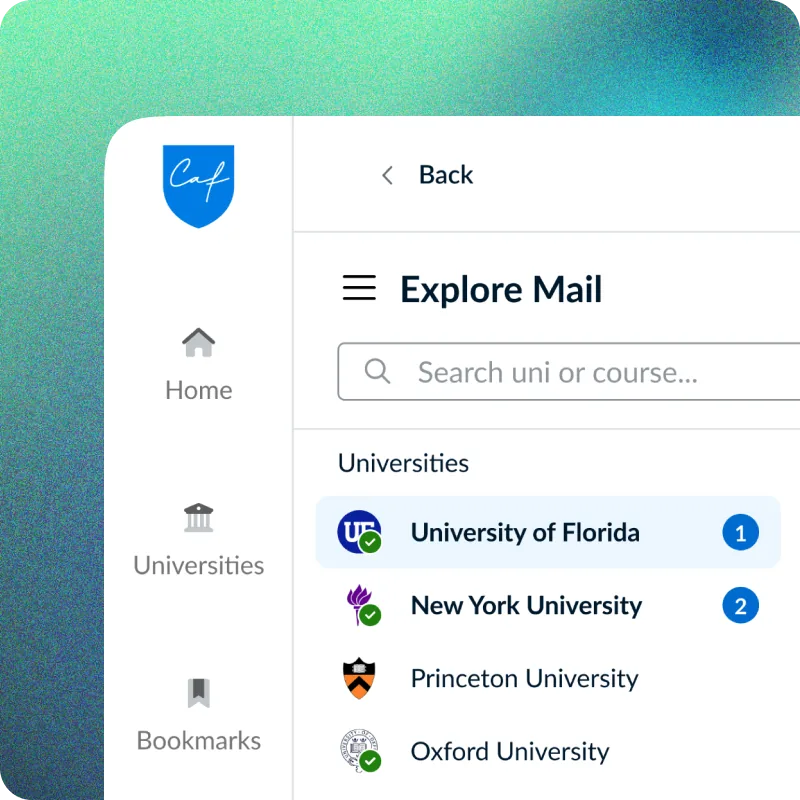
Built an in-house mail app, turning fragmented admissions emails into structured outcome intelligence.